Postingan

Menampilkan postingan dengan label Psisos

Translate

Applying Social Psychology From Problems to Solutions Ind

Menerapkan Psikologi Sosial Dari Masalah ke Solusi TENTANG PENULIS Abraham (Bram) P. Buunk telah sejak tahun 2005 Profesor Akademi di Evolutionary Psikologi Sosial di University of Groningen atas nama Kerajaan Belanda Academy of Arts and Sciences. Bunga yang berlaku utamanya adalah penerapan teori evolusi perilaku sosial manusia. Dia telah menerbitkan banyak pada topik diterapkan, termasuk kelelahan profesional, kecemburuan, absensi, pencegahan AIDS, kesepian, depresi, kepuasan perkawinan, kesejahteraan di kalangan orang tua, dan mengatasi kanker. Dia adalah co-editor dariHealth, penanggulangan dan kesejahteraan: Perspektif dari compar sosial teori Ison (Erlbaum, 1997), danSolidaritas dan prososial Perilaku . (Springer, 2006) Ia telah bertugas di papan ilmiah untuk Yayasan Kanker Belanda (NKB-KWF), dan Yayasan Belanda AIDS. Saat ini ia adalah anggota Komite Program on Evolusi dan Perilaku Organisasi Be...

CONTOH PENERAPAN TEORI PSIKOLOGI SOSIAL Ind

Gambar
4 Menerapkan Sosial. Psikologi CONTOH PENERAPAN TEORI SOSIAL PSIKOLOGI  Bisa psikologi sosial membantu dalam memecahkan masalah sosial? Dan jika hal ini terjadi, bagaimanapsikologi sosial dapat melakukannya? Psikologi sosial adalah ilmu dasar yang mencoba untuk membangunpengetahuan terutama melalui eksperimen dan survei (lihat misalnya Aronson, Wilson & Akert, 2002; Brehm, Kassin & Fein, 2005; Hewstone, Stroebe & Jonas, 2005; Hogg & Vaughan, 2005; Kenrick, Neuberg, & Cialdini, 2005; Myers, 2005). Kadang-kadang, teori dan temuan dari psikologi sosial mungkin tampak agak jauh dari masalah di masyarakat. Namun, banyak jika tidak sebagian masalah sosial kemasyarakatan aspek psikologis (misalnya kejahatan, rasisme, pencemaran lingkungan), dan karena itu psikologi sosial mungkin tidak hanya membantu dalam menjelaskan masalah tersebut, tetapi juga berkontribusi untuk menemukan solusi. Dalam bab ini kita memberikan contoh dari satu masalah tersebut untuk mengg...

Tahap Problema

26 Menerapkan Psikologi Sosial Tahap Masalah: Dari Masalah ke Definisi Masalah PENDAHULUAN Masalah sosial di mana-mana di sekitar kita. Bukalah koran, menonton televisi atau mendengarkan radio, dan tiba-tiba Anda dihadapkan dengan beragam masalah sosial,  banyak yang memiliki dimensi psikologis sosial. Terlepas dari apakah itu con cerns masalah kehamilan remaja, merokok dan kesehatan, perceraian, anti-sosial  perilaku dalam masyarakat perumahan, truancies sekolah, prasangka terhadap etnis minor anggota ity atau bahkan pemanasan global, faktor psikologis sosial memainkan peran dalam semua  mereka . Memang, sebagai masyarakat tumbuh lebih besar dan individu hidup dan bekerja lebih erat bersama-sama, masalah sosial dan lingkungan terikat untuk bangkit, mempengaruhi semakin besar  proporsi penduduk (Gardner & Stern, 1996;. Van Vugt et al, 2000). Oleh karena itu,  ada kebutuhan mendesak untuk keter...

TAhap Analisa -Ind

Gambar
56 Menerapkan Psikologi Sosial Tahap Analisis:Mencari Teori berbasis Penjelasan untuk Masalah PENDAHULUAN Pada fase Soal (Bab 2) kami telah menjelajahi beberapa penjelasan yang mungkin untuk masalah ini. Pada tahap Analisis kami terus mencari penjelasan. Pertama, kita mendefinisikan variabel hasil, yaitu, variabel yang ingin kita ubah. Idealnya variabel hasil harus diungkapkan dalam hal situasi akhir yang diinginkan (misalnya, toleransi terhadap polisi etnis). Selanjutnya, dalam divergen tahap kami mencoba untukmenghasilkan banyak penjelasan sebanyak mungkin dan mencoba untuk menghubungkan penjelasan ini untuk relevan teori-teori psikologi sosial. Akhirnya, dalam konvergen tahap kita mengevaluasi masing-masing penjelasan berbasis teori dalam hal relevansi mereka, validitas, dan masuk akal untuk masalah yang sedang diselidiki.

Tahap Test-Ind

Gambar
84 Menerapkan Psikologi Sosial Tahap Test: Mengembangkan dan Pengujian Proses Model PENDAHULUAN Setelah serangkaian penjelasan telah diidentifikasi dan dipilih oleh seorang psikolog sosial, dia atau dia kemudian mengembangkan model proses. Model ini berfungsi sebagai template untuk mengembangkanintervensi. Dalam bab ini, kita membahas langkah ketiga dari model PATH, Test fase. Dalam tahap ini kita membuat saran tentang bagaimana mengembangkan model proses dan bagaimana untuk menguji validitas empiris dari model.

Tahap Help

Gambar
    Bantuan Tahap   106  Menerapkan Psikologi Sosial Bantuan Tahap: Mengembangkan Intervensi PENDAHULUAN Setelah faktor penyebab variabel hasil telah diidentifikasi dan dipetakan dalam model proses, intervensi dapat dikembangkan. Intervensi merupakan sarana untuk mengubah  faktor-faktor penyebab dan dengan demikian variabel hasil dalam arah yang diinginkan. Sebuah memadai  intervensi menargetkan satu atau lebih faktor penyebab dalam model proses. Namun sering tidak  layak atau bahkan diperlukan untuk menargetkan semua variabel dalam model ini. Oleh karena itu, langkah pertama  dalam tahap Bantuan dari model PATH adalah untuk menentukan faktor penyebab akan tar  geted dalam intervensi. The modifiability faktor dan ukuran efek yang diharapkan  dari intervensi akan mengarahkan pilihan ini.Setelah faktor-faktor ini telah diidentifikasi, sebuah  intervensi yang menargetkan faktor-faktor ini dap...

Conclusion & Glossary-Ind

KESIMPULAN: MENCARI TERTINGGAL DAN MAJU (LOOKING BACKWARD AND FORWARD) Setelah mempelajari bab-bab sebelumnya dan menyelesaikan berbagai latihan, dasar keterampilan untuk mengatasi masalah praktis melalui penerapan teori-teori psikologi sosial akan telah dikembangkan. Namun demikian, biasanya membutuhkan beberapa waktu dan pengalaman ence sebelum Model PATH kami dapat digunakan secara optimal. Pada awalnya Anda dapat mengikuti prosedur terstruktur diuraikan di sini dalam cara yang agak kaku. Ada apa- ing salah dengan itu. Sebaliknya, ini adalah cara terbaik untuk belajar keterampilan dasar dan memperoleh pengalaman dan rasa kompetensi. Akhirnya, bagaimanapun, Anda akan belajar bahwa hal yang paling penting pada akhirnya adalah untuk mendapatkan ke, secara teoritis-empiris suaraintervensi berbasis.

Applying Social Psychology

Applying Social Psychology From Problems to Solutions ABOUT THE AUTHORS Abraham (Bram) P. Buunk has been since 2005 Academy Professor in Evolutionary Social Psychology at the University of Groningen on behalf of the Royal Netherlands Academy of Arts and Sciences. His main current interest is the application of evolution­ary theorizing to human social behaviour. He has published widely on applied topics, including professional burnout, jealousy, absenteeism, AIDS-prevention, loneliness, depression, marital satisfaction, well-being among the elderly, and coping with cancer. He was a co-editor of Health, coping and well-being: Perspectives from social compar­ ison theory (Erlbaum, 1997), and Solidarity and Prosocial Behaviour (Springer, 2006). He has served on scientific boards for the Dutch Cancer Foundation (NKB-KWF), and the Dutch AIDS Foundation. Currently he is a member of the Programme Committee on Evolution and Behaviour of the Netherlands Organization for Scientific Re...

Applying Social Psychology

Gambar
  4 Applying Social. Psychology Applying Social Psychology EXAMPLE OF THE APPLICATION OF SOCIAL PSYCHOLOGICAL THEORIES Can social psychology help in solving societal problems? And if this is the case, how can social psychology do so? Social psychology is a basic science which tries to build knowledge primarily through experiments and surveys (see for example Aronson, Wilson & Akert, 2002; Brehm, Kassin & Fein, 2005; Hewstone, Stroebe & Jonas, 2005; Hogg & Vaughan, 2005; Kenrick, Neuberg, & Cialdini, 2005; Myers, 2005). Sometimes, the theories and findings from social psychology may seem a bit remote from the problems in society. However, many if not most societal problems have social psychological aspects (for example crime, racism, environmental pollution), and therefore social psychology may not only help in clarifying such problems, but also contribute to finding solutions. In this chapter we give an example of one such problem to illustrate this ...

The Problem Phase

Gambar
26   Applying Social Psychology The Problem Phase: From a Problem to a Problem Definition INTRODUCTION Social problems are everywhere around us. Open up a newspaper, watch television or listen to the radio, and suddenly you are confronted with a rich variety of social issues,   many of which have a social psychological dimension. Regardless of whether it con­ cerns the problem of teenage pregnancies, smoking and health, divorce, anti-social   behaviour in residential communities, school truancies, prejudice towards ethnic minor­ ity members or even global warming, social psychological factors play a role in all of   them. Indeed, as societies grow larger and individuals live and work more closely   together, social and environmental problems are bound to rise, affecting an ever larger   proportion of the population (Gardner & Stern, 1996; Van Vugt et al., 2000). Hence,   there is an urgent need for the involvement of social psychologis...
Gambar
56 Applying Social Psychology The Analysis Phase: Finding Theory-based Explanations for Problems INTRODUCTION In the Problem phase (Chapter 2) we have already explored some possible explanations for the problem. In the Analysis phase we continue the search for explanations. First, we define the outcome variable, that is, the variable that we want to change. Ideally the outcome variable should be phrased in terms of the desired end situation (for example, tolerance towards ethnic police officers). Subsequently, in the divergent stage we try to generate as many explanations as possible and try to link these explanations to relevant social psychological theories. Finally, in the convergent stage we evaluate each of the theory-based explanations in terms of their relevance, validity, and plausibility for the problem under investigation.

The Test Phase

Gambar
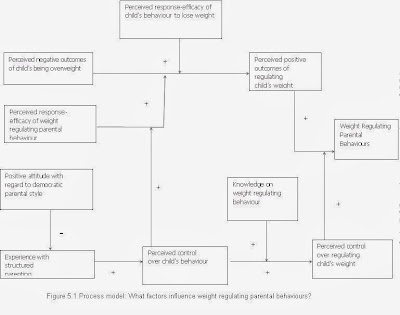
  84 Applying Social Psychology The Test Phase: Developing and Testing the Process Model INTRODUCTION Once a set of explanations has been identified and selected by a social psychologist, he or she then develops a process model. This model serves as a template for developing interventions. In this chapter, we discuss the third step of the PATH model, the Test phase. In this stage we make suggestions on how to develop the process model and how to test the empirical validity of the model. FORMULATING A PROCESS MODEL The explanations selected in Chapter 3 form the core of the process model. A raw ver­ sion of a process model may have been developed in the previous stage already, for example, in the 'why' interview (Chapter 2). A process model is a pictorial representa­ tion of the explanatory variables, and their relationships with each other and with the focal problem (see Figure 4.1, p. 86). Each variable is represented as a box. The boxes (the variables) in the ...

The Help Phase

Gambar
  106 Applying Social Psychology The Help Phase: Developing the Intervention INTRODUCTION Once the factors causing the outcome variable have been identified and mapped in the process model, the intervention can be developed. An intervention is a means to change the causal factors and thus the outcome variables in the desired direction. An adequate intervention targets one or more causal factors in the process model. Yet often it is not feasible or even necessary to target all variables in this model. Therefore, the first step in the Help stage of the PATH model is to determine which causal factors will be tar­ geted in the intervention. The modifiability of the factors and the expected effect sizes of interventions will direct this choice. Once these factors have been identified, an intervention that targets these factors can be developed. Decisions must be made about how the target group will be reached and what the content of the ...

CONCLUSION

    CONCLUSION: LOOKING BACKWARD AND FORWARD After studying the previous chapters and completing the various exercises, the basic skills for addressing practical problems through applying social psychological theories will have been developed. Nevertheless, it usually takes quite some time and experi­ ence before our PATH model can be used in an optimal way. In the beginning you can follow the structured procedures outlined here in a somewhat rigid way. There is noth­ ing wrong with that. On the contrary, this is the best way of learning basic skills and of obtaining experience and a sense of competence. Eventually, however, you will learn that the thing that matters most in the end is to get to a theoretically sound, empirically- based intervention. Indeed, it is important to be quite flexible in applying the various procedures outlined in this book. The more experience you get, the more likely it is that you can switch between the various steps in the model, and ...

10 Interpersonal Aggression-Ind

Gambar
10 Interpersonal Aggression 357 Interpersonal Aggression To live without killing is a thought which could electrify the world, if men were only capable of staying awake long enough to let the idea soak in. —Henry Miller Untuk hidup tanpa pembunuhan adalah pikiran yang bisa menggemparkan dunia, jika laki-laki hanya mampu tetap terjaga cukup lama untuk membiarkan ide merendam masuk -Henry Miller Pada tanggal 2 Oktober 2002, sekitar pukul 6:00 PM, James D. Martin berdiri di tempat parkir sebuah toko kelontong Wheaton, Maryland. Dia ada di sana untuk membeli bahan makanan untuk gerejanya. Entah dari mana datang celah senapan dan beberapa saat kemudian Martin terbaring sekarat di tanah di tempat parkir. Hanya beberapa jam kemudian di 07:40 Amon 3 Oktober 2003, James Buchanan ditembak mati dengan cara yang sama ketika ia sedang memotong rumput di sebuah dealer mobil di White Flint, Maryland. Jadi mulai penembakan yang akan mengklaim kehidupan lebih tujuh korb...

10 Interpersonal Aggression 357

Gambar
Interpersonal Aggression To live without killing is a thought which could electrify the world, if men were only capable of staying awake long enough to let the idea soak in. —Henry Miller On October 2, 2002, at around 6:00 P.M., James D. Martin was standing in the parking lot of a Wheaton, Maryland, grocery store. He was there to buy groceries for his church. From out of nowhere came the crack of a rifle and moments later Martin lay dying on the ground in the parking lot. Just a few hours later at 7:40 A.M.on October 3, 2003, James Buchanan was gunned down in the same way while he was cutting the grass at an automobile dealership in White Flint, Maryland. So began a shooting spree that would claim the lives of seven more unsuspecting victims and seriously wound several others. The only connection between the victims was that they were victims of the “Beltway Sniper.” The victims were seemingly chosen at random. For 3 weeks the Beltway Sniper terrorized residents of Maryland...

8 Group Processes 281

Gambar
  8 Group Processes Never doubt that a small group of thoughtful committed people can change the world: indeed it ’ s the only thing that ever has! —Margaret Mead The mission was supposed to be the crown jewel of the American space program. The Challengermission was supposed to show how safe space travel had become by sending along Christa McAuliffe, a teacher from Concord, New Hampshire, who would become the fi rst civilian in space. She was supposed to teach a 15-minute class from space. The Challenger mission was supposed to be a success just like the 55 previous U.S. space flights. But, what wasn’t supposed to happen actually did: Fifty-eight seconds into the flight, the trouble started; a puff of smoke could be seen coming from one of the solid rocket boosters. About 73 seconds into the flight, Challenger exploded in a huge fi reball that spread debris over several miles. The crew cockpit plummeted back to earth and hit the Atlantic Ocean, killing all seven astr...

7 Conformity, Compliance, and Obedience 231

7 * Conformity, Compliance, and Obedience When you think of the long and gloomy history of man, you will find more hideous crimes have been committed in the name of obedience than have ever been committed in the name of rebellion. —C. P. Snow The jury had been impanelled to hear the case State v. Leroy Reed. Reed, a paroled felon, had been arrested for possessing a gun. Karl, a firefi ghter, sat in the jury box, carefully listening and watching. The prosecuting attorney argued that the defendant should be found guilty of violating his parole, despite any sympathy jurors might feel for him. The defense attorney argued that even though Reed had bought a gun, he should not be found guilty.

Persuasion and Attitude Change

Gambar
6 Persuasion and Attitude Change  185 Chicago, 1924: Jacob Franks, a wealthy businessman, answered the telephone and listened as a young but cultivated voice told him that his 14-year-old son, Bobby, had been kidnapped and could be ransomed for $10,000. The next morning, while Mr. Franks arranged for the ransom, he was notifi ed that the nude and bloody body of his son had been found in a culvert on Chicago’s South Side. Franks was sure that the boy in the morgue was not Bobby, because the kidnappers had assured him that this was simply a business proposition. He sent his brother to the morgue to clear up the misidentifi cation. Unfortunately, the body was that of his son; his head had been split open by a blow from a blunt instrument.